
-
Your next favorite book
is waiting.

by Milo Todd
For readers of All the Light We Cannot See and In Memoriam, a moving and deeply humane story about a trans man who must relinquish the freedoms of prewar Berlin to survive first the Nazis then the Allies while protecting the ones he loves.
In 1932 Berlin, Bertie, a trans man, and his friends spend carefree nights at the Eldorado Club, the epicenter of Berlin's thriving queer community. An employee of the renowned Dr. Magnus Hirschfeld at the Institute of Sexual Science, Bertie works to improve queer rights in Germany and beyond, but everything changes when Hitler rises to power. The institute is raided, the Eldorado is shuttered, and queer people are rounded up. Bertie barely escapes with his girlfriend, Sofie, to a nearby farm. There they take on the identities of an elderly couple and live for more than a decade in isolation.
In the final days of the war, with their freedom in sight, Bertie and Sofie find a young trans man collapsed on their property, still dressed in Holocaust prison clothes. They vow to protect him--not from the Nazis, but from the Allied forces who are arresting queer prisoners while liberating the rest of the country. Ironically, as the Allies' vise grip closes on Bertie and his family, their only salvation becomes fleeing to the United States.
Brimming with hope, resilience, and the enduring power of community, The Lilac People tells an extraordinary story inspired by real events and recovers an occluded moment of trans history.
The Lilac People just won a Lammy!
...ence across more than 25 categories, including fiction, memoir, poetry, and young adult literature. This year's awards were announced on June 12, and The Lilac People by Milo Todd won the Transgender Fiction award. We read The Lilac People for the BookBrowse Book Club, and Milo was a guest here for a Q & A.
-kim.kovacs
It’s June, and it’s therefore Pride month. Name a book you’ve enjoyed that features an LGBTQ+ main character
If you had asked this question 10 years ago, I might have been able to name one or two books that I had read that had a LGBTQ character. When I looked at my current reading there were so many books in multiple genres that had LGBTQ characters, often they were 5 star reads for me. But I had only r...
-Dee_Driscole
What are you reading this week? And what did you think of last week’s books? (3/5/2026)
...sh, @Laura_S , I couldn't agree with you more about https://www.bookbrowse.com/bb_briefs/detail/index.cfm/ezine_preview_number/21776/the-lilac-people The Lilac People by Milo Todd. I was really disappointed that one didn't receive more publicity as I thought it was one of the best historical fiction novels I'd read in a very lo...
-kim.kovacs
What are you reading this week? And what did you think of last week’s books? (1/8/2026)
...lly felt deserved more recognition (the other being https://www.bookbrowse.com/bb_briefs/detail/index.cfm/ezine_preview_number/21776/the-lilac-people The Lilac People by Milo Todd).
-kim.kovacs
Ask the Author mug winners
Here are the latest BookBrowse mug winners for their questions to our visiting authors: William Boyle ( https://www.bookbrowse.com/reviews/index.cfm/book_number/4957/saint-of-the-narrows-street Saint of the Narrows Street ): @Anne_Glasgow Heather O'Neill ( https://www.bookbrowse.com/reviews/index...
-kim.kovacs
BookBrowsers ask Milo Todd, author of The Lilac People
I really appreciate everyone's questions, time, and support! I'll try to check back in early tomorrow for any final questions, but since I'm traveling for a book festival, I may not get to them until early next week (if that's allowable). But if there are no more questions, once again, thank you ...
-Milo_T
Does this book reflect today's current political climate? Why or why not?
It's incredible how closely the book focuses on today's environment of hate. It's unfortunate how ignorant people are of history. We don't learn and history repeats itself.
-Cindy_R
All German citizens were made to pay reparations after WWII (in the form of physical labor and low food rations). Do you believe this was fair? Why or why not?
I am not sure of the question. Were all German citizens living in Germay at the time of the atrocities and were still alive forced to pay? Were the citizens who left Germany and returned after the war forced tp pay? For how many years was this repayment required? Many people supported the Nazis d...
-Janis_Harrington
Dr. Hirschfeld tells Bertie, "Transvestites are the canaries of the world." (p. 190) What do you suppose he meant? Do you agree that this was true then? How about now?
It's a brilliant way to describe it. The most vulnerable are the first under attack, the first to have their rights stripped away. They are the canaries that warn us when we are in jeopardy. It applies as well today as it did then. The government goes after the LGBTQ and minority communities firs...
-Heather_J
In what ways, if any, does this book alter your perceptions of WWII, the Holocaust, and/or America's role in the liberation of Germany? Did anything surprise you?
I knew that homosexuals were targeted, so the targeting of "transvestites" isn't really a surprise. However, the treatment of LGBTQ by the allies after they were liberated is shocking and shameful, and a part of the Holocaust story I certainly don't remember learning in school.
-Heather_J
Do you believe Sofie would have been better off if she'd never met Bertie? Why or why not?
Sofie's life might have been easier without Bertie, but less meaningful. Her suffering is real, but so is her growth. The Lilac People is not about proper relationships or happy endings. It's a story about witnessing other people's truths, even when they hurt. Bertie gives Sofie something no one ...
-Karen_M
About the The Lilac People by Milo Todd Discussion category
I did finish the book several weeks ago, and I apologize for not responding to you more quickly. I had never heard of Dr. Magnus Hirshfield or The. Institute of Sexual Science and that is why I love to read. I had sworn off anymore World War Two books because they are painful to read. However, I ...
-Janis_Harrington
Goss tells Bernie that the problem with Berliners is that “You take nothing seriously. Everything’s a joke.” He goes on to say, “Never laugh in the face of villainy.” (p.71) What’s your opinion of this advice?
The advice carries wisdom, mainly when evil covers itself in absurdity. There's a difference between using humor to endure oppression and using it to avoid confronting it. Satire has power, but silence or mockery in place of resistance can allow cruelty to proceed unchecked. Still, humor can be s...
-Karen_M
Karl says that survival is inherently selfish (p.248). Do you agree or disagree? Why?
Karl's statement that "survival is inherently selfish" in The Lilac People is a powerful, provocative idea. Whether you agree depends on how you interpret both "survival" and "selfish." Agreeing with Karl: Survival as Selfish You possibly will agree with Karl if you see survival as requiring diff...
-Karen_M
Bertie is often preoccupied with Gert's whereabouts, especially after WWII. In what ways is his preoccupation reasonable? In what ways is it detrimental? Where is the line, if any, between healthy and unhealthy concern about a loved one?
Bertie's concern with Gert's whereabouts in The Lilac People is a response shaped by trauma, loyalty, and unresolved guilt. Depending on how the reader views it, his preoccupation can be reasonable or potentially detrimental. A few logical traits of Bertie's preoccupation could be: Survivor's Gui...
-Karen_M
When Karl shares his story in Chapter 9, no white space is used. Contrarily, when Hitler becomes chancellor, plenty of white space is used (pp 164-179). What do you think these narrative approaches are meant to express?
The author uses the shape of the text to help the reader feel what the characters are feeling. When Karl tells his story, it's written in one long block without breaks. This style feels heavy, intense, and hard to read. Karl describes something painful and traumatic about surviving Dachau. His st...
-Karen_M
Throughout the novel, Bertie demonstrates a fixation with inanimate objects, such as where they came from and where they went. Why do you think this is?
Bertie's fixation with inanimate objects is a coping mechanism and reflects his emotional state. It was shaped by the trauma he experienced from war, loss, and survival. Fixating on objects gives him a sense of control. They don't die or disappear without a reason. Their origins have meaning. The...
-Karen_M
In what ways do you feel community is expressed in this book? Which expressions are positive and which are negative?
On the positive side, Bertie, Sofie, and Karl form an improvised family after Karl is rescued from the vegetable garden. Their bond is created from shared survival and trauma, but also in care and commitment. There is a community arising from shared suffering and mutual support. The three become ...
-Karen_M
What do you think "Das Lila Lied" ("The Lilac Song") means to Bertie, Sofie, Karl, and Gert? What do you think it represents in the story itself?
It's a symbol of identity, defiance, and hope. Written in 1920s Germany as a gay liberation anthem, it takes on significance for the main characters in the novel. For Bertie, "Das Lila Lied" reminds him of what it means to live authentically. He recognizes the song's message of resistance and dig...
-Karen_M
Overall, what did you think of The Lilac People? (no spoilers, please!)
I was also totally surprised when I found out how transgender people were treated during Hitler's reign. So much has been written about the Jews but had I never heard about this segment of the population.
-Mary_F
Bertie, Karl, and Sofie all show their grief and survivor's guilt in different ways. What are these ways and why do you think they differ from one another?
Bertie sees himself as a caretaker, especially for Sofie. He stays strong outwardly while questioning if he could have done more. He feels persistent guilt, showing his need to fix things and protect others, particularly Karl. Bertie's role makes him feel responsible for everyone. His guilt stems...
-Karen_M
Trans people during the Weimar Republic could carry police-sanctioned cards identifying themselves as trans. In relation to the time, do you feel this was a good thing or a bad thing? Why?
I totally agree in that it was a violation of privacy even if it was initially designed for protection.
-Lisa_G
Do you feel Sofie and Bertie are bad people for going into hiding instead of actively fighting against fascism? Why or why not?
Bertie and Sofie literally ran for their lives. Bertie had already narrowly escaped the siege at the Institute. Had he not escaped out the window, he most certainly would have been gravely injured, if not killed. Had they not escaped to Ulm when they did, they would have been forcibly transported...
-Janie-Hickok-Siess
Do you feel Bertie was in unrequited love with Gert? Why or why not?
No, I got the impression that Gert was Bertie's very best friend, not that Bertie was in love with him. They may have had a bit of a romantic relationship in the beginning, but it didn't last. They moved past that and developed a deep mutual respect and genuine friendship, and Bertie missed his b...
-Janie-Hickok-Siess
Why do you think Karl was so resistant to masculinity lessons despite identifying as a man?
I got the sense that Karl found it extremely difficult & exhausting to have to work at presenting himself to the world in a way that didn't feel natural to him. I also felt that he resented it – as did Bertie – which was understandable. There was also a sense of defeat emanating from Karl because...
-Janie-Hickok-Siess
Do you interpret the ending as happy, sad, bittersweet, foreboding, hopeful, or something else? Why?
The ending was brilliant. The author did a great job of making it bittersweet, injecting some drama for effect and to make it interesting & surprising, while illustrating the point that not all stories end happily, particularly when set during and immediately following World War II. As someone el...
-Janie-Hickok-Siess
Is there a quote or scene in The Lilac People that stood out for you? Why do you suppose it resonated?
"When people hurt bad enough, they'll grab any idea to make their own lives better, no matter how illogical. . . . They're pandering to the people who were already hateful and looking for reason and protection to be so." It's a perfect description of what has been happening in the U.S. since 2015...
-Janie-Hickok-Siess
What are you reading this week? (5/15/2025)
I'm enjoying Scott Turow's 2025 book Presumed Guilty. I think he writes lawyer procedurals that balance lawyerly knowledge with plot. Just finished The Lilac People by Milo Todd. A great read that took me on an emotional journey.
-Robin_G
"Stirring...In Todd's hands, this vital chapter of LGBTQ+ history comes to life, as the characters find a means to survive through found family. This timely historical drama hits hard." —Publishers Weekly (starred review)
"Todd's detailed narrative conveys the terrors and uncertainties of life during wartime: the inability to trust even close neighbors or loved ones' true identity; the fear of attack; the wrenching horror of trying to make sense of who lived and died. The ambitions and joys of Berlin's queer community are equally well drawn...Todd vividly illustrates the power of love and community in the face of oppression." —Kirkus Reviews
"A well-written, engrossing story full of suspense; a good addition to literature on the history of LGBTQIA+ Germans during World War II." —Library Journal
"In The Lilac People, Milo Todd brings to life the hope, joy, and complexities of trans identity and community in Weimar Berlin and beyond. At once a celebration of what becomes possible when humans truly accept one another and a stark reminder of the precipice between personal freedom and catastrophe, the story of Bertie Durchdenwald's fight for autonomy, dignity, and love cuts through history to underline what's at stake in our present moment." —Jason Lutes, creator of Berlin
"Exhaustively researched, gorgeously crafted and presciently timed" —LA Times
"This beautiful, necessary story, full of enthralling action and sharp moral questions...announces an important new voice in American fiction." —Pittsburgh Post-Gazette
"The Lilac People is wholly unique and original. The novel offers a fresh and timely perspective, illuminating the inclusion of a much-needed historical trans narrative, one that celebrates the soul-sustaining life force of community." —The Boston Globe
This information about The Lilac People was first featured
in "The BookBrowse Review" - BookBrowse's membership magazine, and in our weekly "Publishing This Week" newsletter. Publication information is for the USA, and (unless stated otherwise) represents the first print edition. The reviews are necessarily limited to those that were available to us ahead of publication. If you are the publisher or author and feel that they do not properly reflect the range of media opinion now available, send us a message with the mainstream reviews that you would like to see added.
Any "Author Information" displayed below reflects the author's biography at the time this particular book was published.
Milo (he/him) is co-EIC at Foglifter Journal, runs The Queer Writer newsletter, and teaches creative writing and history primarily to queer and trans adults. He's received awards, accolades, and fellowships from such places as Lambda Literary, Tin House, Pitch Wars, GrubStreet, Monson Arts, and the Massachusetts Cultural Council. The BookBrowse Book Club recently discussed his debut, The Lilac People.

If you liked The Lilac People, try these:

We Must Not Think of Ourselves
by Lauren Grodstein
Published 2024
A heart-wrenching story of love and defiance set in the Warsaw Ghetto, based on the actual archives kept by those determined to have their stories survive World War II
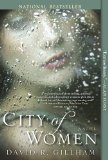
by David R.. Gillham
Published 2013
It is 1943 - the height of the Second World War - and Berlin has essentially become a city of women. In this page-turning novel, David Gillham explores what happens to ordinary people thrust into extraordinary times, and how the choices they make can be the difference between life and death.

by Philip Sington
Published 2012
A subtle, brilliantly plotted story set the twilight years of Communist East Germany.

L.A. Women by Ella Berman
Two ambitious writers in 1960s LA face betrayal when one writes a novel based on the other's life.






Your guide toexceptional books
BookBrowse seeks out and recommends the best in contemporary fiction and nonfiction—books that not only engage and entertain but also deepen our understanding of ourselves and the world around us.


